
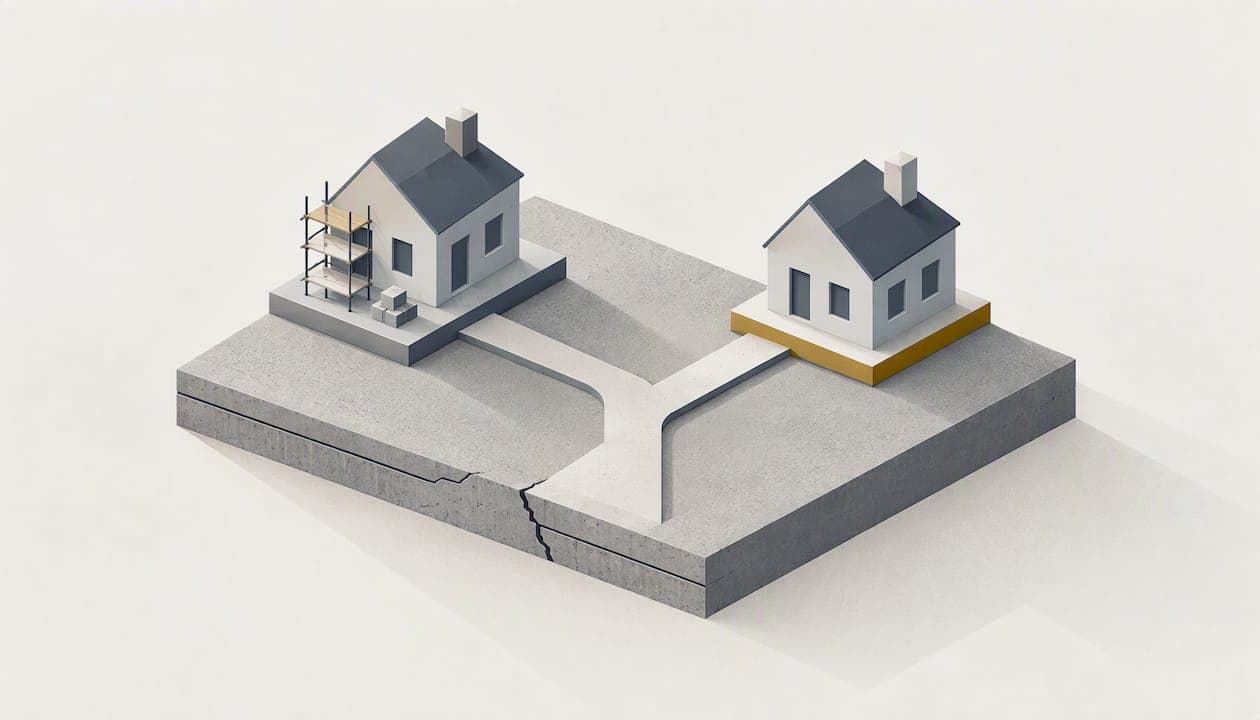
You can sell a house with foundation problems. It is harder than selling a house in good shape, but it is not impossible. You have three real routes: fix the foundation and list, list the house as-is and accept a lower price, or sell as-is to a cash buyer who takes the repairs on. Which one fits depends on your repair budget, your equity, and how fast you need to be done.
This guide walks you through the warning signs, what you have to tell buyers, what repairs can cost, and how each route works.
TL;DR
- Foundation problems can shrink your buyer pool, because some buyers can't get FHA or USDA loans on a house with foundation damage, and many conventional lenders ask for repairs.
- In most states you must disclose a known foundation problem, even in an as-is sale. Hiding it can lead to a lawsuit after closing.
- Get an inspection and several repair quotes before you decide. Then compare the repaired sale price, minus repair costs, against an as-is sale.
- If you can't fund repairs or need speed, a direct cash sale skips repairs, commissions, and fees. We make a cash offer within 24 hours.
Table of Contents
- Signs of a foundation problem in a house
- How foundation problems change a sale
- What you have to disclose
- Repair first or sell as-is?
- What foundation repair costs
- Does homeowners insurance cover foundation damage?
- Our view: foundation problems are a pricing problem, not a dead end
- Sell your foundation-problem house to us
- How a cash sale works, step by step
- Steps to take before you sell
- FAQ
- Sources
Signs of a foundation problem in a house
Most foundation trouble shows up inside the house before it shows up in the dirt. Look for these:
- Wide cracks, or stair-step cracks, in brick or concrete.
- Uneven or sloping floors.
- Doors and windows that stick or won't close right.
- Gaps around window frames or exterior doors.
- Cracked drywall.
- Water pooling under or beside the house.
Realtor.com lists wide step-wise cracks, uneven floors, stuck doors, window gaps, and pooled water under the house as warning signs. Another professional guide adds cracked drywall and sticking doors to the list.
One caution: not every crack is a structural problem. Hairline drywall cracks can come from normal settling. The only way to know is to have a structural engineer or a foundation specialist look at the house.

Where you live matters
Soil changes what counts as normal. In Texas, expansive clay soil swells and shrinks with moisture, and minor movement may be common. In Colorado or the Pacific Northwest, even small signs of settling can raise red flags with buyers. If you own in a clay-soil area, a local buyer will often know what they are looking at and won't panic.
How foundation problems change a sale
A foundation problem hits a sale in three places: the buyer pool, the financing, and the inspection.

The buyer pool. Many buyers want a house they can move into. Foundation issues can leave you with cash buyers and investors, unless the foundation is repaired or the buyer uses a renovation loan, according to a professional guide on selling homes that need major repairs.
The financing. Foundation problems may disqualify buyers from FHA or USDA loans, and many conventional lenders require repairs. A buyer who needs a mortgage can walk away from your house simply because the loan won't go through.
The appraisal. Lenders work from the lesser of the contract price or the appraised value. Federal research notes that a low appraisal can raise the down payment a buyer needs or threaten the sale. The buyer can then pay more down, take a costlier loan, renegotiate, or leave.
The inspection. If the contract depends on a satisfactory inspection, the buyer can cancel without penalty or negotiate over who pays for repairs. A listed house with a foundation issue often goes under contract, then loses the deal at inspection. That costs you weeks, and in foreclosure or probate you may not have weeks.
What you have to disclose
Short answer: tell the truth about what you know.
In most states, sellers must disclose known material defects, including foundation problems, even when selling as-is. Failing to do so can expose you to lawsuits after closing. "As-is" means you won't repair anything after the offer. It does not mean you can stay quiet about what you know.
A few practical points:
- Realtor.com advises that a seller can sell as-is without repairs but must tell buyers about the foundation problem, and usually lowers the price or offers a closing-cost credit.
- Getting a professional foundation inspection and several repair estimates, then sharing them before offers come in, helps buyers price the risk.
- Some jurisdictions follow caveat emptor, or buyer beware. There, sellers aren't forced to make complete disclosures, but local restrictions may apply.
Rules differ by state. If you are unsure what your state requires, ask a real estate attorney licensed where the house sits before you sign anything.
Repair first or sell as-is?
There is no single right answer. Realtor.com's guidance is to fix foundation problems when you can. It also says that selling to a fixer-upper buyer can make sense when the rest of the house is in good shape and you can't pay for repairs.
Here is how the routes compare.
| Repair, then list | List as-is | Sell as-is for cash | |
|---|---|---|---|
| Upfront cost to you | Full repair bill | Inspection and quotes | None for repairs |
| Buyer pool | Widest, including financed buyers | Narrower, many lenders balk | Cash buyer who takes on repairs |
| Price | Closest to market value | Lower, often with credits | Lower than a repaired sale |
| Speed | Slowest: repairs, then listing | Depends on buyers and inspection | Fastest |
| Risk of falling through | Lower | Higher | Lower |
When repairing makes sense
If repairs are modest and the market is strong, fixing first can pay. Redfin's guidance is that when repair costs run under roughly $10,000 to $20,000 in a seller's market, repairing may be worth it. Buyers get peace of mind, the house qualifies for traditional financing, and you can list at full market value.
If you do repair, expect to need paperwork. When repairs are in progress, sellers may need a sewer line inspection and an engineer's certification to satisfy buyers.
When selling as-is makes sense
An as-is sale can fit if you don't have money for repairs, need speed, or want to target cash buyers. Expect buyers to offer less. Weigh the likely sale price minus repair costs against the as-is price, and factor in your equity and your mortgage balance.
If you are behind on payments, a foreclosure clock is running, and an engineer's report plus months of repairs may not fit inside it.
What foundation repair costs
Get at least two or three written quotes. Prices swing with the cause of the problem, the soil, and the size of the house.
One professional guide puts the average foundation repair at about $5,100. Complex structural work, such as piering, leveling, or slab replacement, can run $15,000 to $30,000 or more.
That gap is why a quote matters. A drainage fix and a full underpinning job are very different decisions. Use the numbers to answer one question: after repairs, would the house sell for enough more than an as-is sale to cover the bill and the time?
Does homeowners insurance cover foundation damage?
Sometimes, but often not. NerdWallet explains that standard homeowners insurance generally covers foundation damage only when a covered event causes sudden and accidental harm. Examples are fire, windstorm, falling objects, or accidental water or steam discharge from plumbing.
It generally does not cover gradual settling, wear and tear, faulty construction, floods, or earthquakes. The California Department of Insurance's guide says the same in plain terms: earthquake, flood, earth movement, and wear and tear are usually excluded, and your actual policy controls.
Read your policy, then call your insurer or agent and ask about your specific damage. If a burst pipe caused it, say so in the claim.
Our view: foundation problems are a pricing problem, not a dead end
We have bought houses in every kind of condition since 2015, and foundation problems come up often. Owners usually call us after they have already spent weeks worrying that the house is unsellable. It isn't.
What we see is simple. A house with a foundation issue still has value. The problem is that the usual route, listing, showings, buyer financing, inspection, repair negotiations, asks you to carry the repair risk and the wait. If you are facing foreclosure, handling an inherited house, going through a divorce, or tired of a rental, you often can't carry either.
That is why we buy directly. We make a fair cash offer within 24 hours, we can close in as little as seven days, and there are no fees or commissions. You don't repair anything, and you don't clean anything. We handle the paperwork, including the legal side in complex situations like probate.
Our advice: get the facts first. Find out what the problem is, and disclose it honestly. Then compare your options side by side. If a cash sale gives you the clean exit you need, we are here. If not, you will still know your numbers.
Ammanuel
Sell your foundation-problem house to us
We buy houses across the United States in any condition, including houses with cracked, settling, or sinking foundations. You don't pay for an inspection, repairs, agent commissions, or closing fees to work with us.
To see what we would pay, request your free cash offer. There is no obligation, and a real person will talk you through it.

If your house is in Texas, where expansive clay soil is a common cause of foundation movement, we also buy locally in Houston, Dallas, and San Antonio.
How a cash sale works, step by step
- Tell us about the house. Share the address, what you know about the foundation, and your timeline. Honest detail helps us make an accurate offer.
- Get your offer. We aim to give you a fair cash offer within 24 hours. It is free and carries no obligation.
- Pick your closing date. We can close in as little as seven days. If you need more time, we can set a later date.
- Close and get paid. We handle the paperwork. You don't make repairs, and you don't pay commissions or fees.
What to expect on price
A cash buyer takes on the repair work, the holding costs, and the risk. That is why a cash offer on a house with foundation damage will usually be lower than a repaired, fully listed sale. What you get in return is certainty, speed, and no out-of-pocket cost. Compare both numbers honestly before you choose.
Steps to take before you sell
Whatever route you choose, do these first:
- Get a foundation inspection. A structural engineer or foundation specialist can tell you what is cosmetic and what is serious.
- Collect repair quotes. Two or three written estimates give you a real number to work with.
- Check your insurance policy. Find out whether a covered event, such as plumbing discharge, caused the damage.
- Know your disclosure duty. Look up your state's rules or ask a real estate attorney.
- Run the math. Compare the repaired price minus repair costs, the as-is price, and the cash offer. Include your mortgage balance and any foreclosure or probate deadlines.
If you are in the middle of a foreclosure, time is the factor that matters most. Talk to us early, or to a HUD-approved housing counselor, while you still have options.
FAQ
Is it hard to sell a house with foundation issues?
It can be challenging, but it is not impossible. Foundation problems can disqualify buyers from FHA or USDA loans, and many conventional lenders require repairs. That leaves cash buyers and investors as your most likely buyers if you don't repair first.
Can I sell a house with foundation problems as-is?
Yes. You can sell as-is without making repairs, but you still have to tell buyers about the problem. Expect a lower price or a closing-cost credit. A direct cash buyer can purchase the house in its current condition with no repairs on your side.
Do I have to disclose foundation problems?
In most states, yes. Sellers generally must disclose known material defects, even in an as-is sale, and failing to do so can lead to lawsuits after closing. Some caveat emptor jurisdictions are looser, so check your state's rules or ask a real estate attorney.
Does homeowners insurance cover foundation repair?
Only in some cases. Coverage generally applies when a covered event, like a windstorm or accidental plumbing leak, causes sudden damage. Gradual settling, wear and tear, floods, and earthquakes are generally excluded, so read your policy and ask your insurer.
How much does foundation repair cost?
The average is about $5,100, but complex jobs like piering, leveling, or slab replacement can run $15,000 to $30,000 or more. Get several written quotes so you know your own number before you decide whether to repair or sell as-is.
Sources
- Selling a House With Foundation Issues? It Can Be Done, Realtor.com
- How to Sell a House That Needs Major Repairs, Effective Agents
- The Top 9 Things That Might Fail a Home Inspection, Redfin
- Selling a House With Foundation Issues, Redfin
- Schedule a home inspection, Consumer Financial Protection Bureau
- Information losses in home purchase appraisals, Consumer Financial Protection Bureau
- How to Sell a Home With Foundation Problems, Realtor.com
- Yes, You Can Sell a Fixer-Upper As Is, but Should You?, Realtor.com
- How To Sell a House With Foundation Problems, Mashvisor
- Should You Fix Up Your House or Sell It As Is?, Experian
- Does Home Insurance Cover Foundation Repair?, NerdWallet
- Residential Insurance guide, California Department of Insurance